

Evangelist · Invite & Connect
Ephesians 4:11-13 (ESV)
“And he gave the apostles, the prophets, the evangelists, the shepherds and teachers, to equip the saints for the work of ministry, for building up the body of Christ, until we all attain to the unity of the faith and of the knowledge of the Son of God, to mature manhood, to the measure of the stature of the fullness of Christ”
You tend to notice who's not here.
In a room full of people, your attention often goes toward the person who is new, disconnected, or standing on the outside.
You think about people who aren't part of the conversation yet. You notice the guy who doesn't know anyone. And when something has been meaningful to you, you naturally start thinking about who else might benefit from experiencing it.
Connection comes naturally to you.
You look for common ground. You think about how to communicate in a way someone can understand. And when the opportunity is there, you're willing to invite someone to take a step closer.
You don't just want people to hear about something good.
You want to bring them into it.
That's the heart of the Invite & Connect contribution.
WHAT YOU BRING
Evangelistic contribution helps move people from the outside toward connection.
You tend to ask questions like:
- Who's not here yet?
- How can I connect with him?
- How can I say this in a way that makes sense to him?
- What's his next step—and how can I invite him to take it?
You may find yourself noticing someone others have overlooked, finding common ground with people whose experiences are different from yours, explaining familiar ideas in language an outsider can understand, or simply extending the invitation that gives someone a way in.
Your contribution isn't simply being outgoing.
It's recognizing people who are disconnected and helping create a path toward belonging, faith, and community.
YOUR BLUEPRINT
AWARENESS — You notice them.
Your attention naturally goes toward who isn't connected yet.
You notice the new person in the room. The man standing on the edge of the group. The friend who would benefit from being there but isn't.
Where others naturally focus on the people already gathered, part of your attention remains on the person outside the circle.
CONNECTION — You find common ground.
Once you notice someone, your instinct is often to look for a point of connection.
Different backgrounds, experiences, beliefs, or personalities don't necessarily stop you. You begin looking for something you share—a story, an interest, an experience, a question.
You're not trying to manufacture a relationship.
You're looking for the bridge that already exists.
COMMUNICATION — You make it understandable.
Connection changes how you communicate.
You naturally think about what another person knows, what he doesn't know, and what might make an unfamiliar idea confusing or difficult to hear.
Rather than expecting him to learn your language first, you look for ways to translate what matters into language he can understand.
The truth doesn't change.
The way you help someone hear it might.
INVITATION — You bring him in.
Eventually, connection creates an opportunity:
“Come with me.”
You're often comfortable giving someone a clear next step instead of simply hoping he figures it out.
That might mean an invitation into a conversation, a group, a friendship, an experience, or ultimately toward Jesus.
You don't simply tell people what's available.
You help them find a way in.
WHEN YOU'RE AT YOUR BEST
At your best, you bring connection and invitation.
You help people cross boundaries that might otherwise keep them outside. You make unfamiliar environments feel more accessible. You communicate in ways that help people understand rather than making them feel like they should already know.
And because you notice the person who isn't connected yet, you help keep a community from becoming comfortable only with itself.
Perhaps one of the greatest expressions of your contribution is simple:
You make room for one more.
That's why this contribution matters to the Kingdom.
Throughout the Gospels, Jesus repeatedly moved toward people others overlooked, crossed social boundaries, spoke in ways ordinary people could understand, and invited people to follow him.
In Ephesians 4, Paul places the evangelistic contribution alongside the other gifts Christ gives for the equipping and building up of his people.
The goal isn't simply getting more people in the room.
It's helping people move toward Jesus and into the life of his body.
WATCH YOUR BLIND SIDE
Every strength can become distorted when it operates alone.
Because connection comes naturally to you, you may assume a relationship is deeper than it actually is.
Because you're constantly thinking about who's next, you may unintentionally neglect the people who are already here.
Because you want people to feel welcome, you may be tempted to avoid difficult truths that could make someone uncomfortable.
And because invitation matters to you, you can become so focused on helping someone take the next step that you forget he may need time before he's ready to take it.
There's another danger for someone wired toward connection:
You can mistake activity for relationship.
Healthy Invite & Connect contribution learns that making someone comfortable isn't the same as loving him, invitation isn't pressure, and communicating truth clearly doesn't require watering it down.
Sometimes faithfulness means extending the invitation.
Sometimes it means staying connected even when the answer is no.
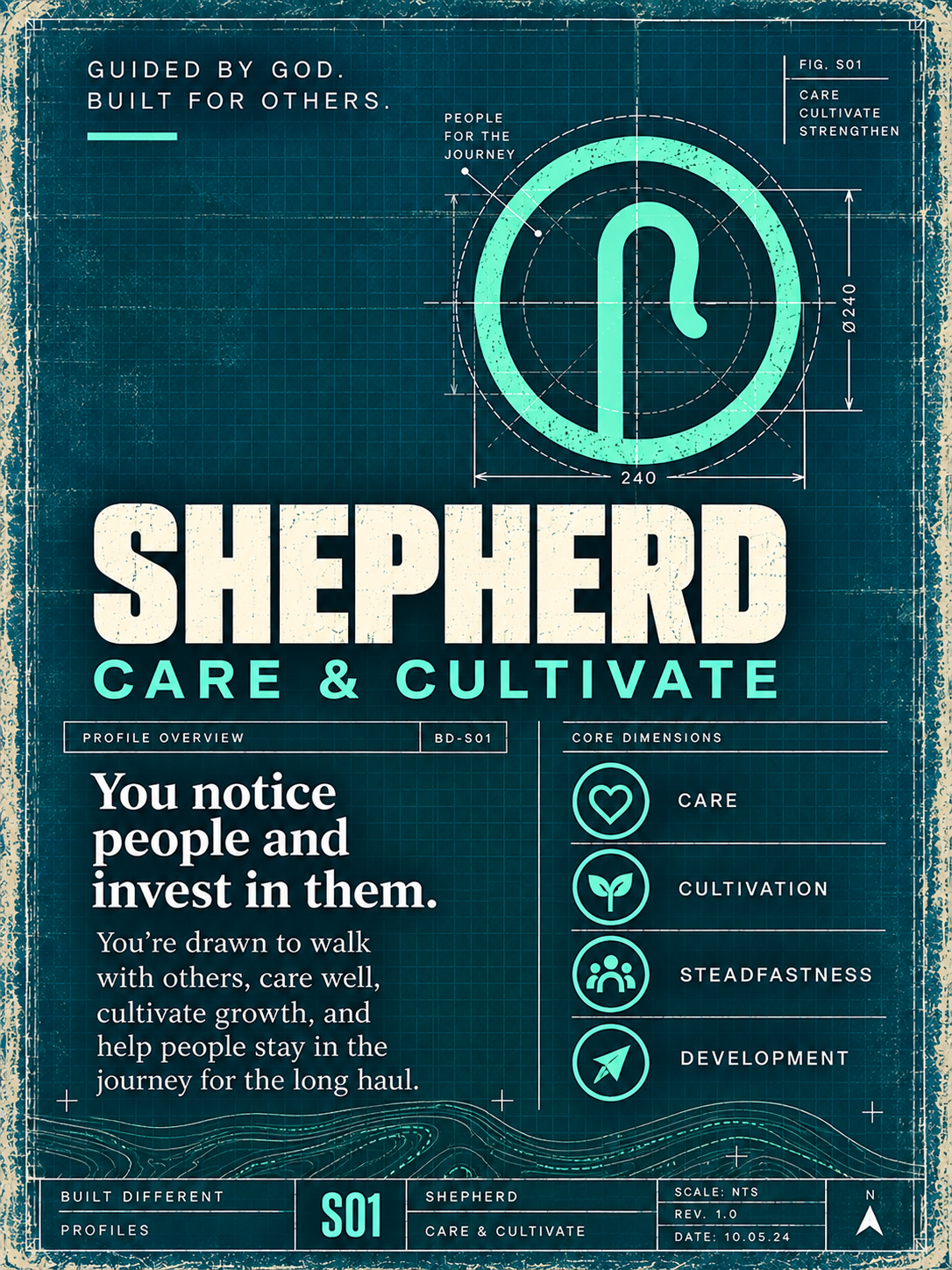
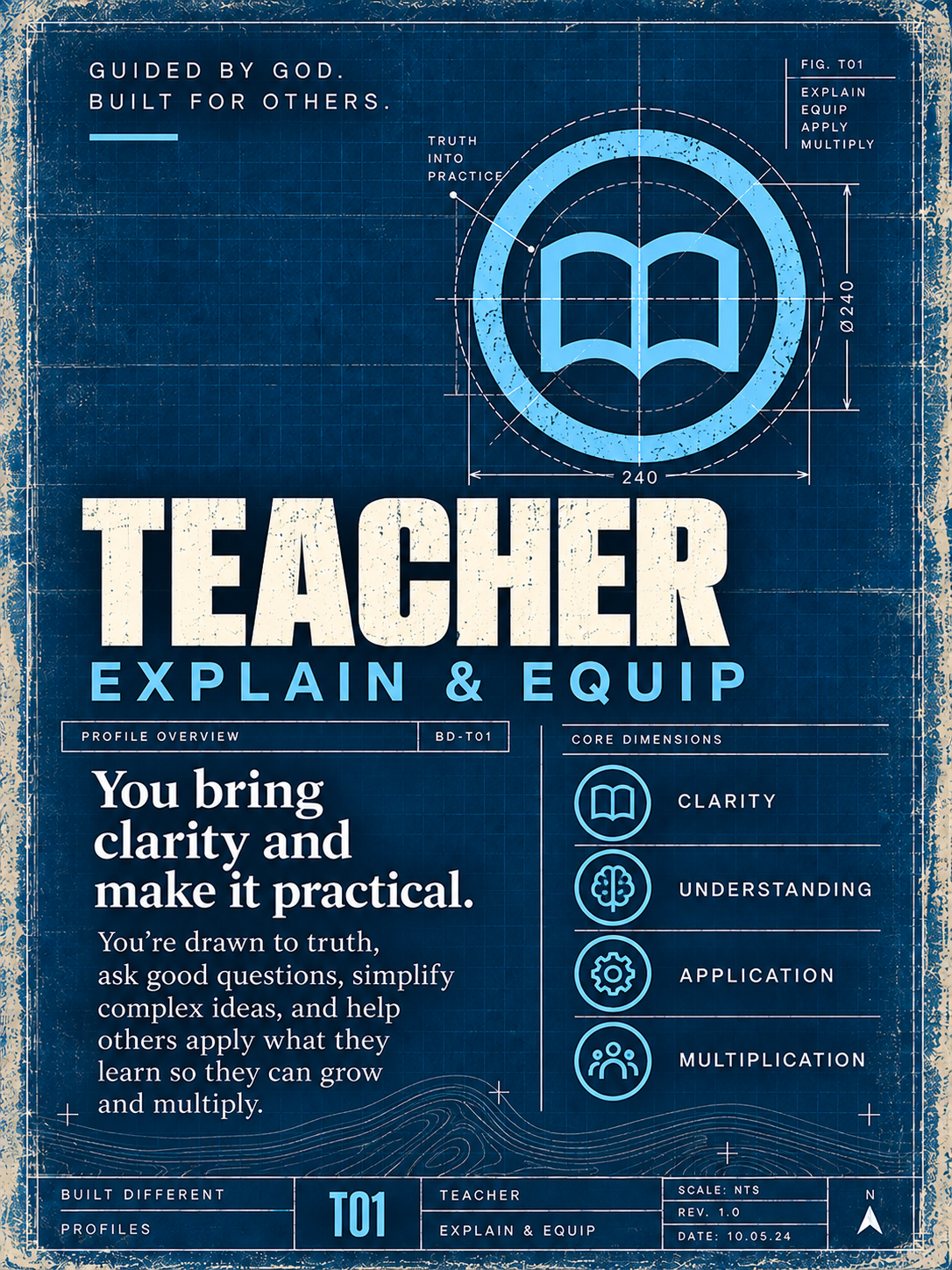
You weren't meant to do this alone.
Your contribution gets stronger when it works alongside the others.
The Kingdom doesn't need five versions of you. It needs each of us bringing what God has given us for the good of the whole body.



How Are You Built Different?
Discover the way you naturally strengthen others and contribute to the Kingdom.
Take The Built Different Assessment Learn More