
Bears
-
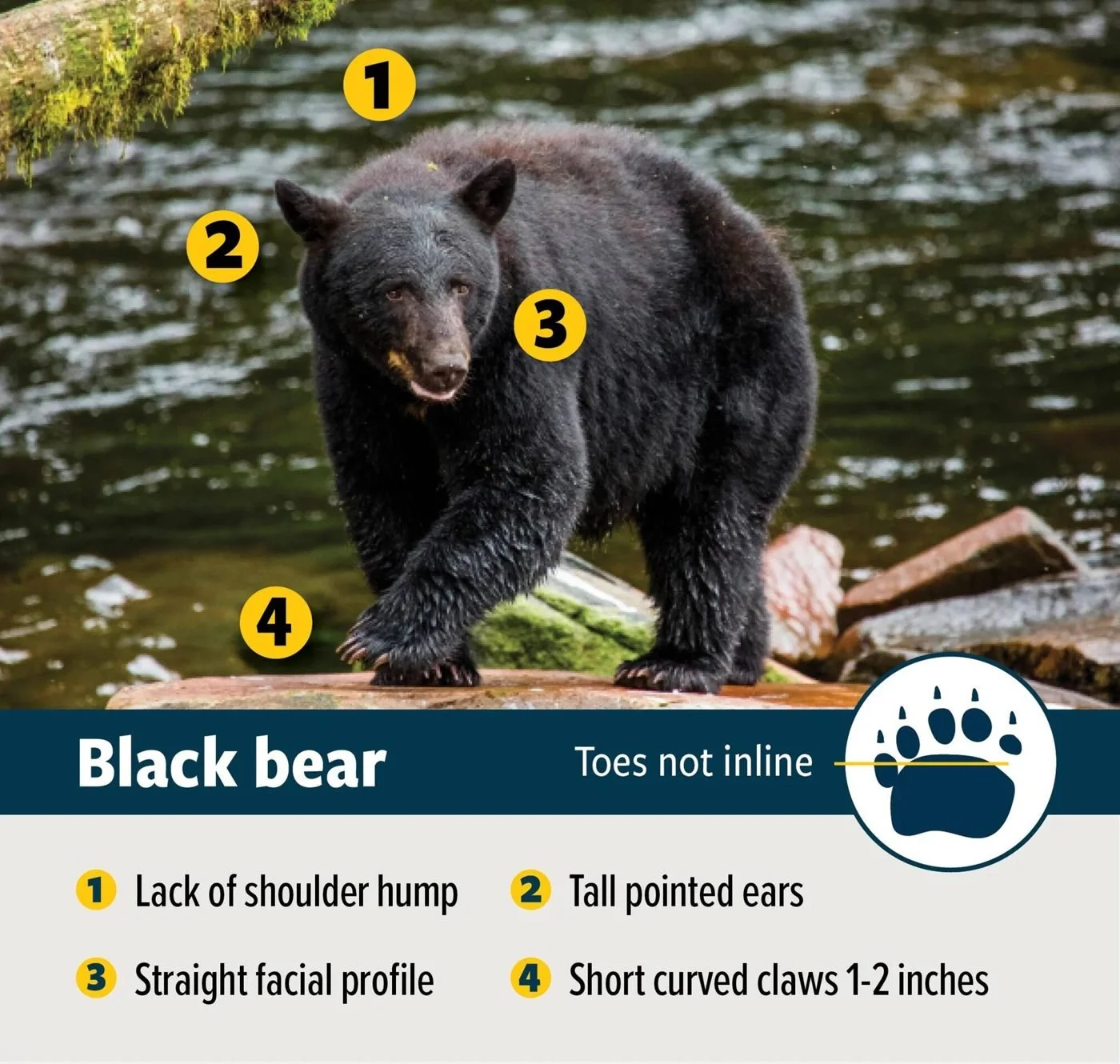
Black Bear (Ursus americanus)
Black bears are found throughout forested areas and periphery riparian habitats of Wyoming, with local densities depending on habitat quality. Black bears have been managed as a game species in Wyoming since the mid 1970s.
-
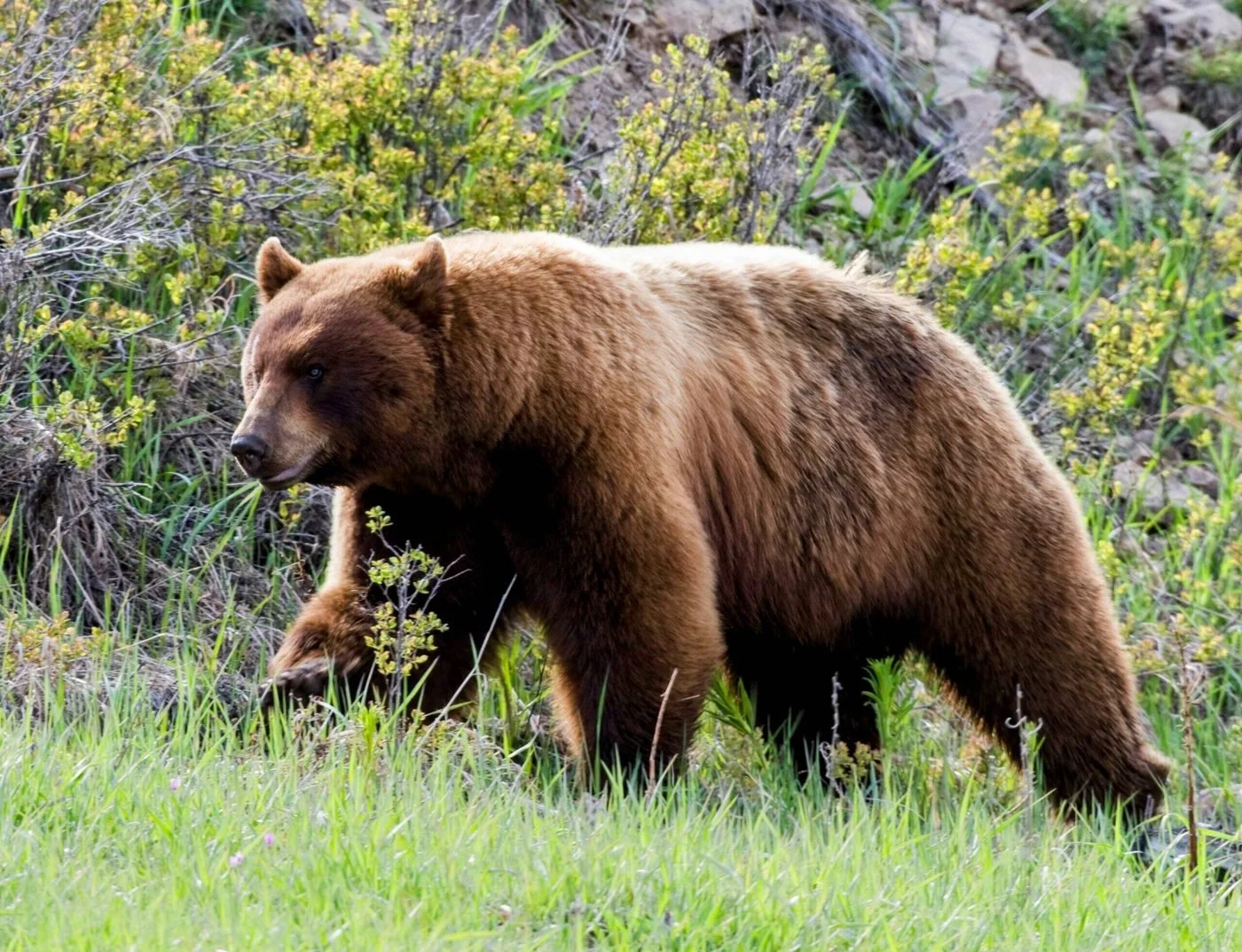
Cinnamon Black Bear
Cinnamon black bears are red-brown due to a 9,360-year-old genetic mutation (R153C) in the TYRP1 gene that reduces black pigment (eumelanin) and increases red/yellow pigment (pheomelanin). This mutation, similar to one causing albinism in humans, is prevalent in the US Southwest and is believed to provide better camouflage in open, western habitats.
-
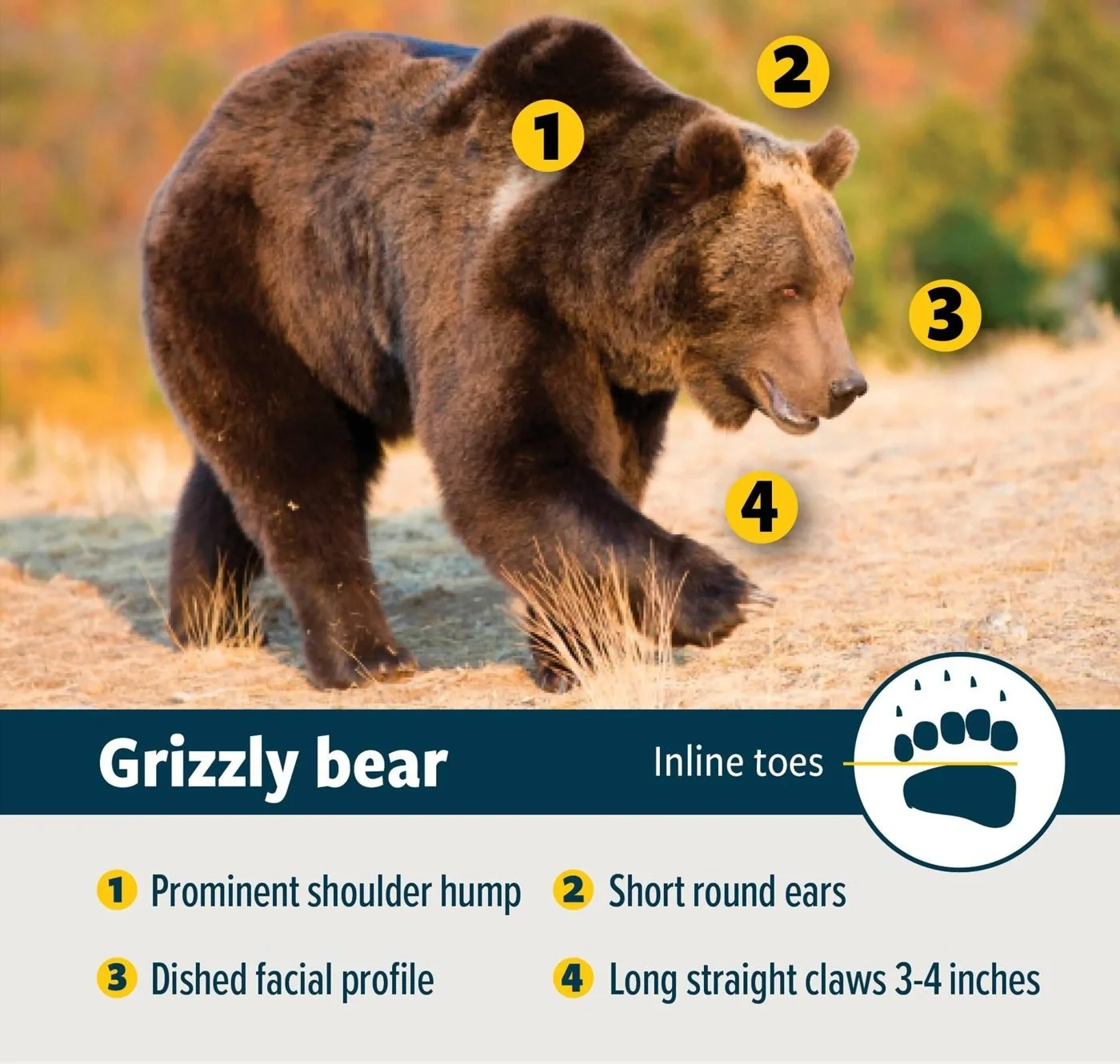
Grizzly (Ursus arctos horribilis)
The adult bruins typically weigh between 250-700 pounds in Wyoming, with males being larger than females. Grizzly bears are a subspecies of the brown bear and are recognized by their distinct physical features. They have a muscular shoulder hump, which is used for digging. Grizzlies have large, dish-shaped faces, long claws (up to 4 inches) and an exceptional sense of smell, which they rely on to locate food from miles away. Their fur ranges from light brown to nearly black, often with silvery or “grizzled” tips that give them their name.
What if the bear is brown?
It depends… All Grizzly bears are brown bears, but not all brown bears are Grizzly bears. It is easy to mistake a cinnamon black bear with a grizzly if you are not familiar with their features.
Other wildlife
-
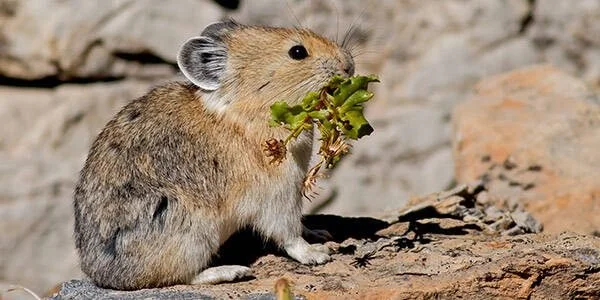
American Pika (Ochotona princeps)
Despite their cuddly appearance, American pikas—the smallest members of the lagomorph group—are among North America’s toughest animals. Pikas are one of the few mammals in the lower 48 states that can survive their entire lives in alpine terrain, the windswept no-man’s-land above tree line.
-
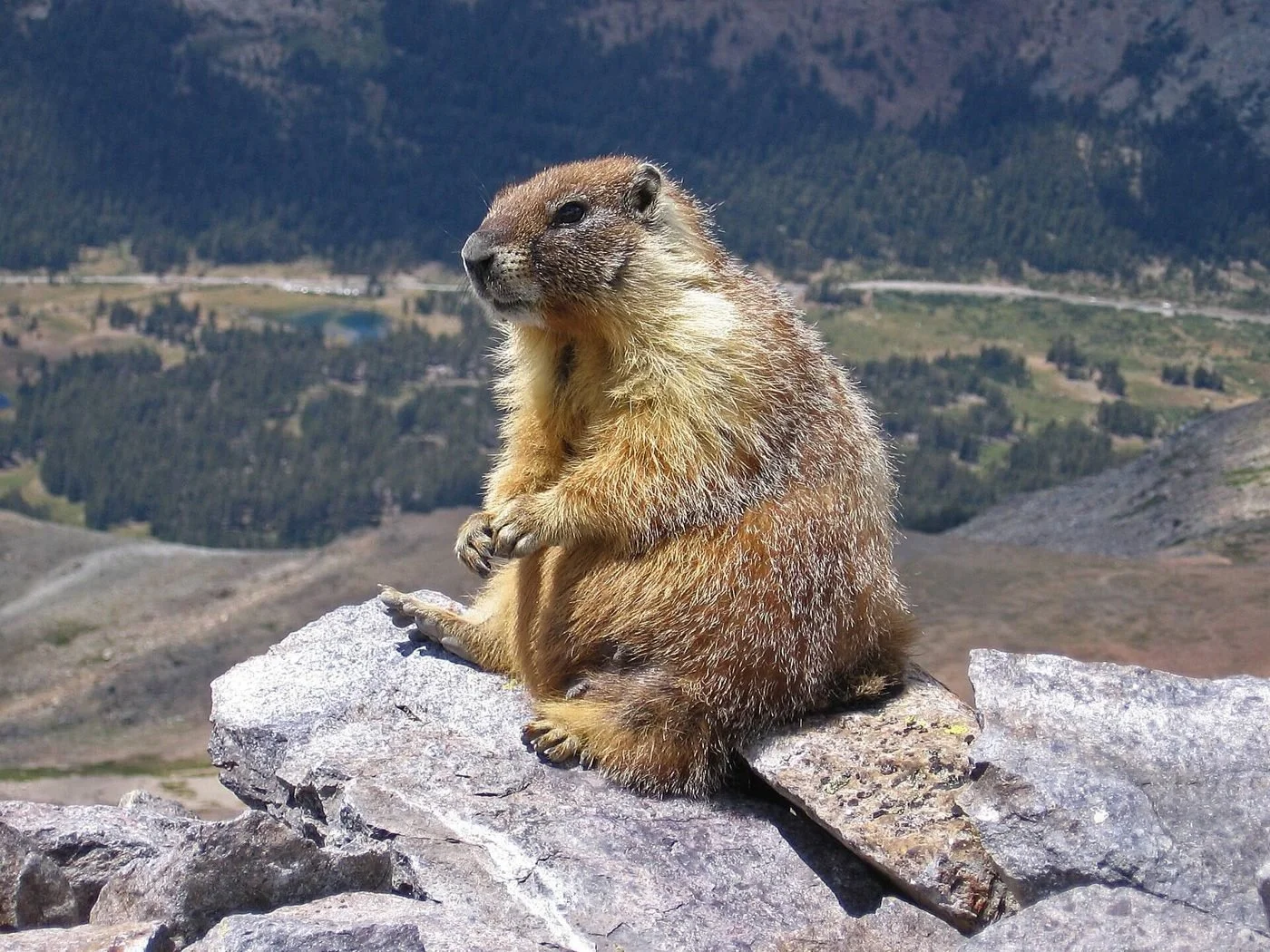
Yellow-bellied Marmot (Marmota flaviventer)
The yellow-bellied marmot (also known as the rock chuck) is a large, stout-bodied ground squirrel native to mountainous and semi-arid regions of southwestern Canada and the western United States, including the Rocky Mountains, Sierra Nevada, and the Great Basin, often living above 2,000 metres (6,500 feet). The fur is mainly brown, with a dark bushy tail, yellow chest and white patch between the eyes, and they weigh up to approximately 5 kilograms (11 pounds). They are highly social, living in burrows in colonies of up to twenty. They are diurnal and feed on plant material, insects, and bird eggs. They hibernate for approximately eight months starting in September. They have an average lifespan of 15 years.
-
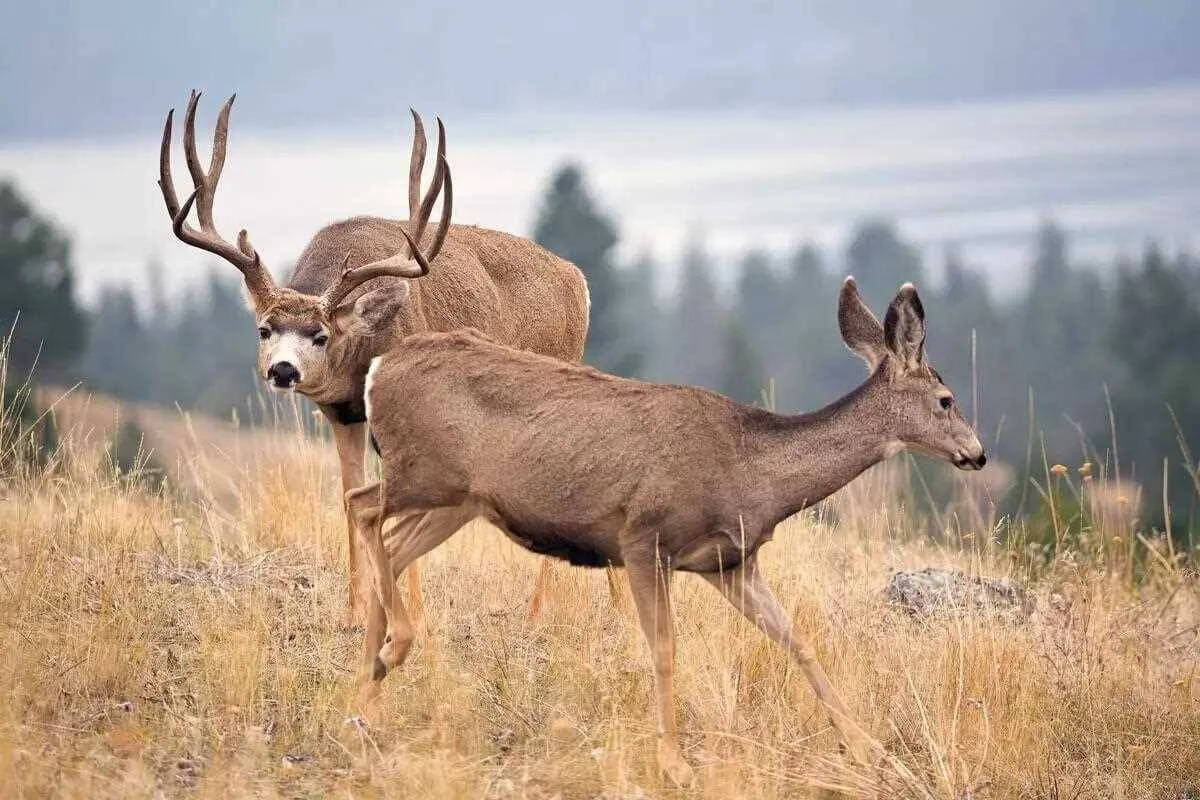
Mule Deer (Odocoileus hemionus)
There are six subspecies of mule deer.
-
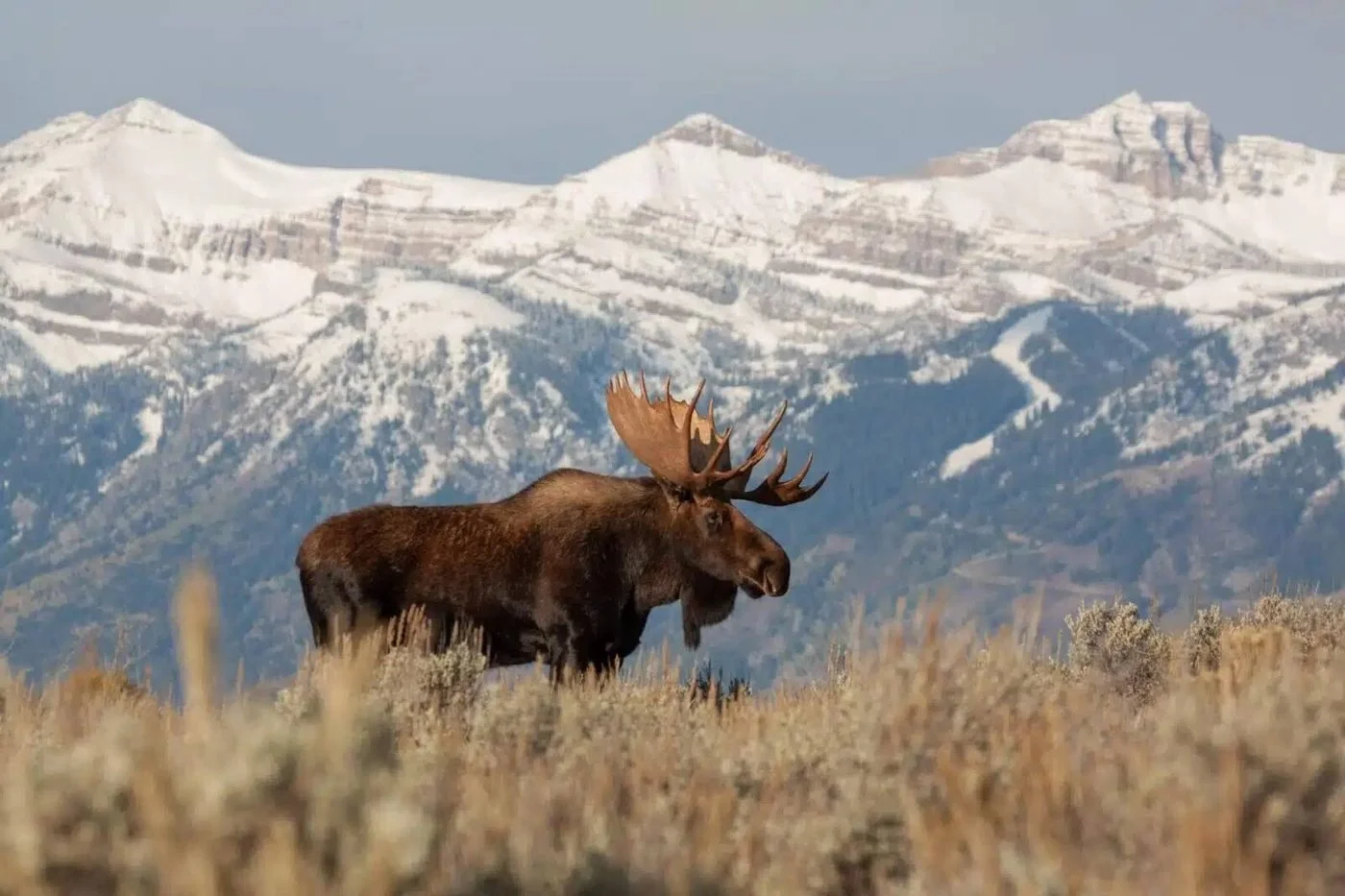
Moose (Alces alces shirasi)
Wyoming is home to the Shiras moose, the smallest of North America’s moose subspecies, with significant populations in the Bridger-Teton National Forest and Grand Teton National Park. These iconic animals, often seen in riparian areas and willow flats, weigh up to 1,000–1,400 pounds and are best observed at dawn or dusk.
-
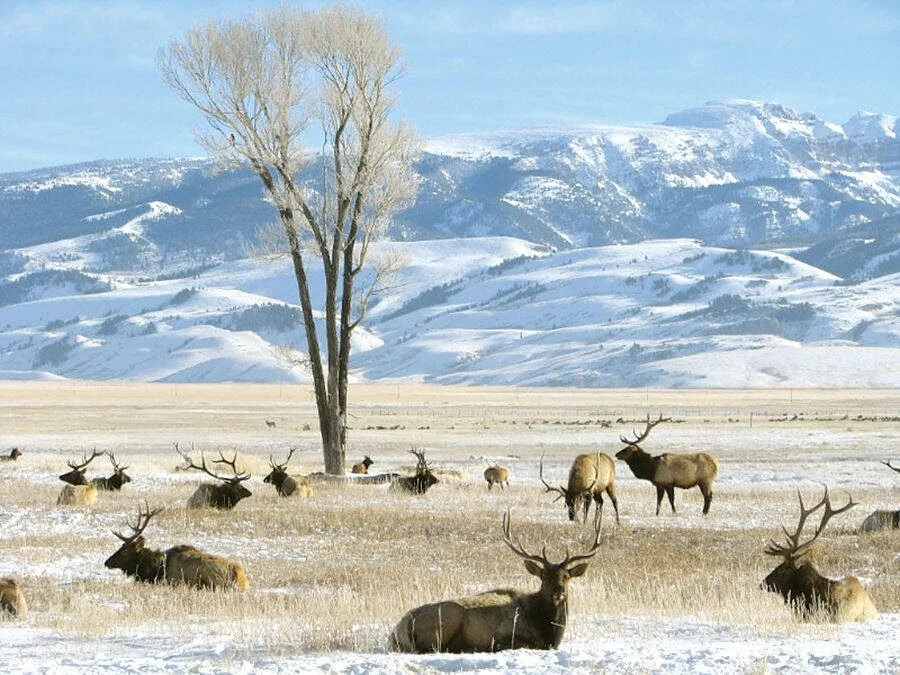
Elk (Cervus canadensis)
Wyoming hosts one of the largest elk populations in North America, with numbers at historic highs. Elk are found statewide, with major concentrations near Jackson Hole and the National Elk Refuge, where thousands winter.
-
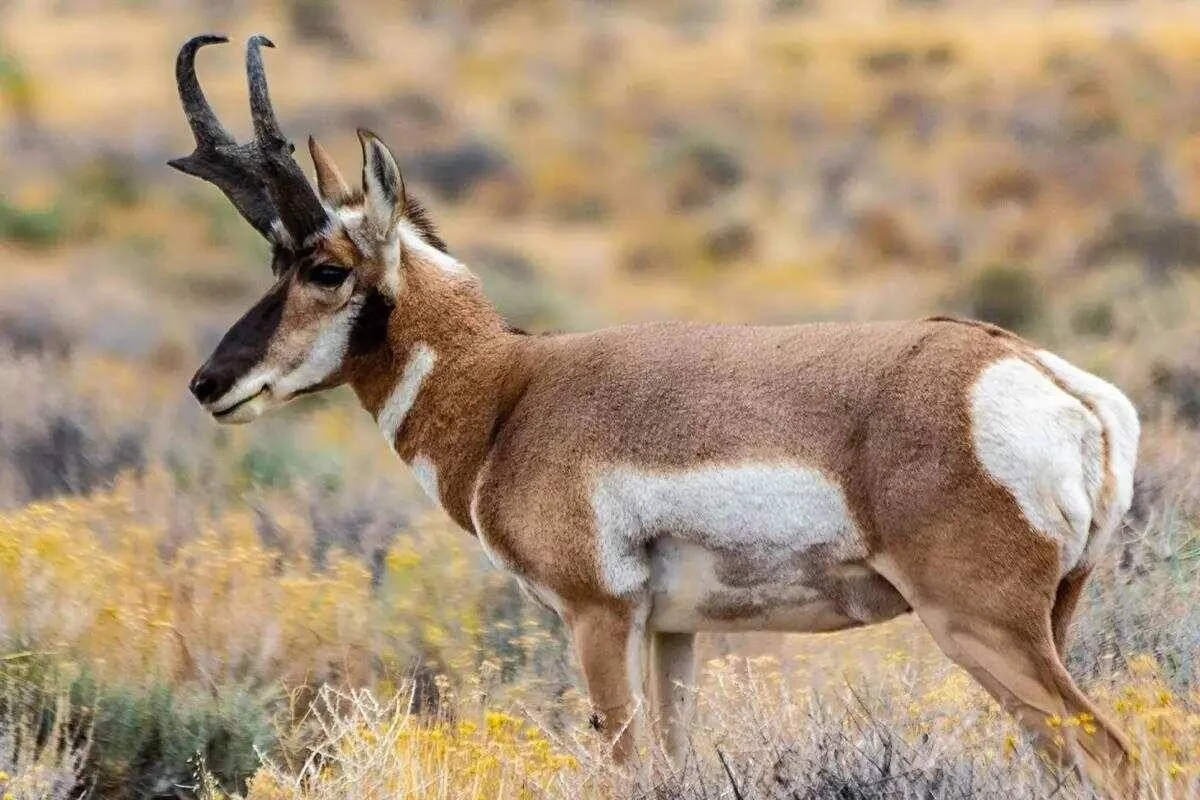
Pronghorn (Antilocapra americana)
Wyoming is home to North America’s largest pronghorn population, numbering approximately 320,000, which constitutes the majority of the continent’s total. As the fastest land mammal in the Western Hemisphere, they can reach speeds up to 55-60 mph. They inhabit open plains and sagebrush basins, with notable populations in Grand Teton and Yellowstone, often migrating over 100-200 miles.
-
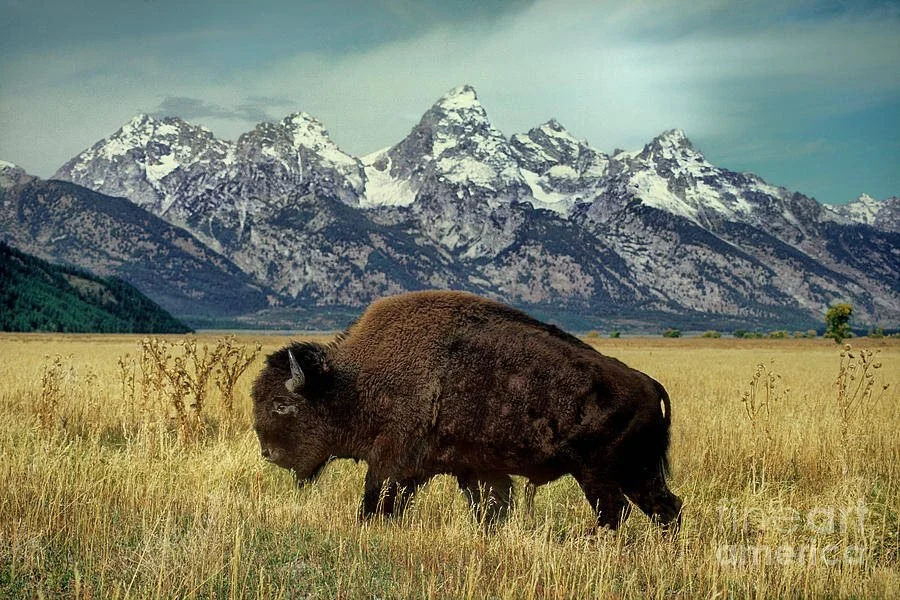
Bison (Bison bison)
Wyoming is home to two major free-ranging wild bison herds—the Yellowstone (~4,500+) and Jackson (~500) herds—representing a major conservation success after near-extinction in the early 1900s. As the state mammal, they inhabit areas like Grand Teton National Park and the National Elk Refuge, with limited, highly regulated hunting allowed to manage populations. The plains bison and the woods bison are two different species.
Plants & the Teton Range
-
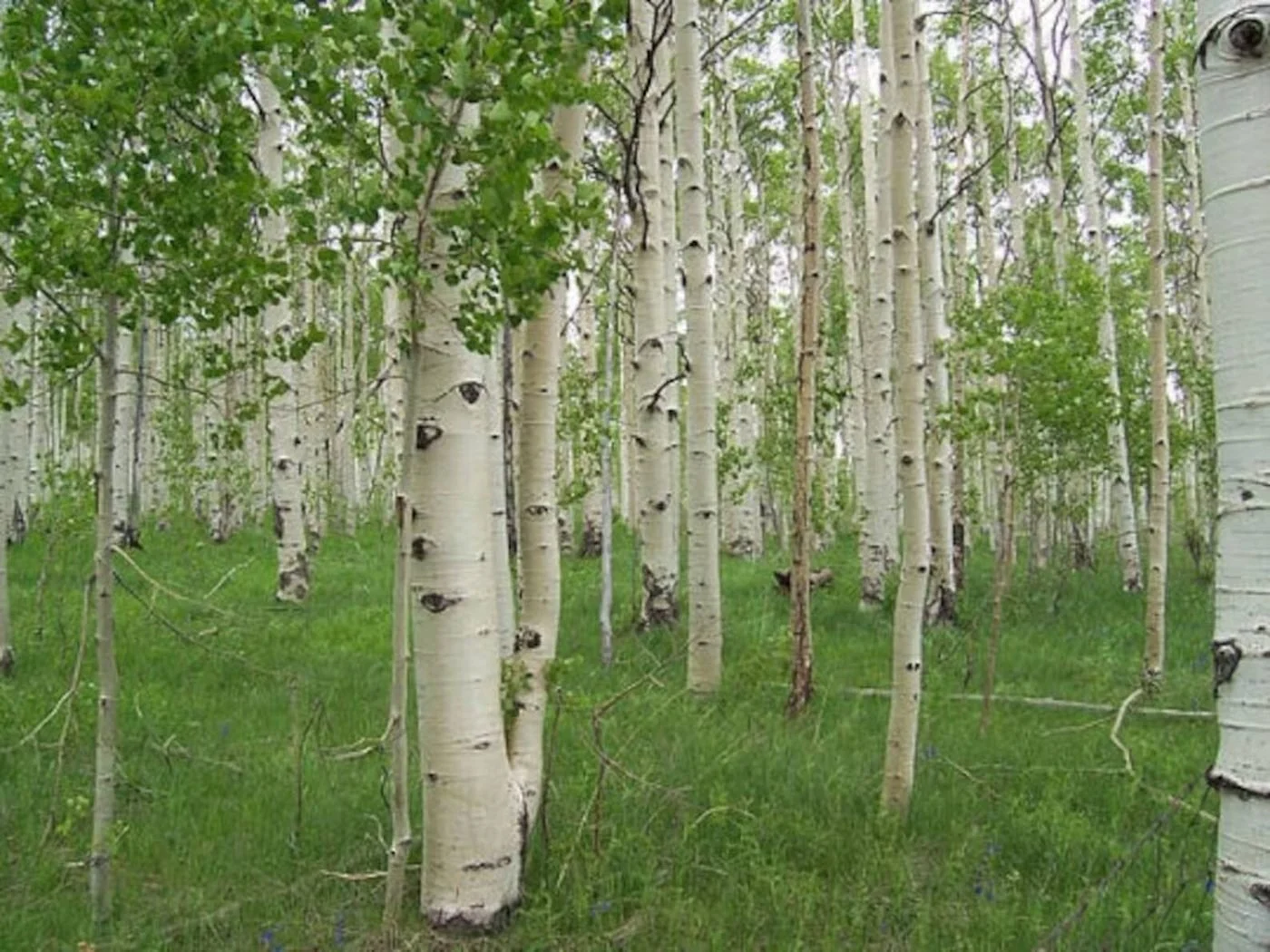
Quaking Aspen (Populus tremuloides)
One aspen tree is actually only a small part of a larger organism. A stand or group of aspen trees is considered a singular organism with the main life force underground in the extensive root system. Before a single aspen trunk appears above the surface, the root system may lie dormant for many years until the conditions are just right, including sufficient sunlight. In a single stand, each tree is a genetic replicate of the other, hence the name a “clone” of aspens used to describe a stand.
-
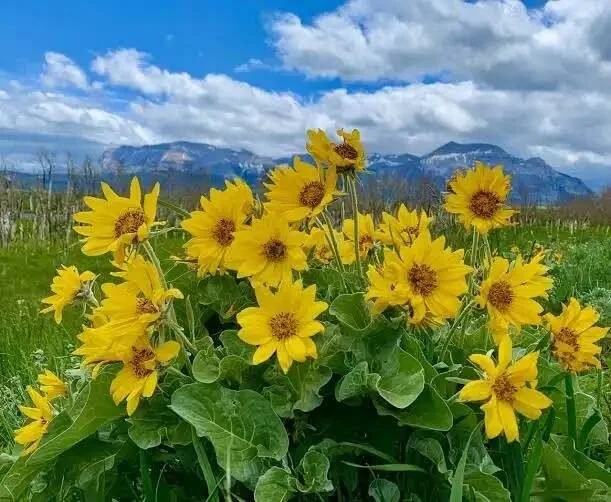
Arrowleaf Balsamroot (Balsamorhiza sagittata)
Arrowleaf balsamroot, a plant of the Asteraceae (sunflower family), is fairly common in cold, dry areas of the West from Colorado west to the Sierra Nevada and into Canada. It may be found most abundant in mountain fields, but can also be a common plant in the understory of conifer forests.
-
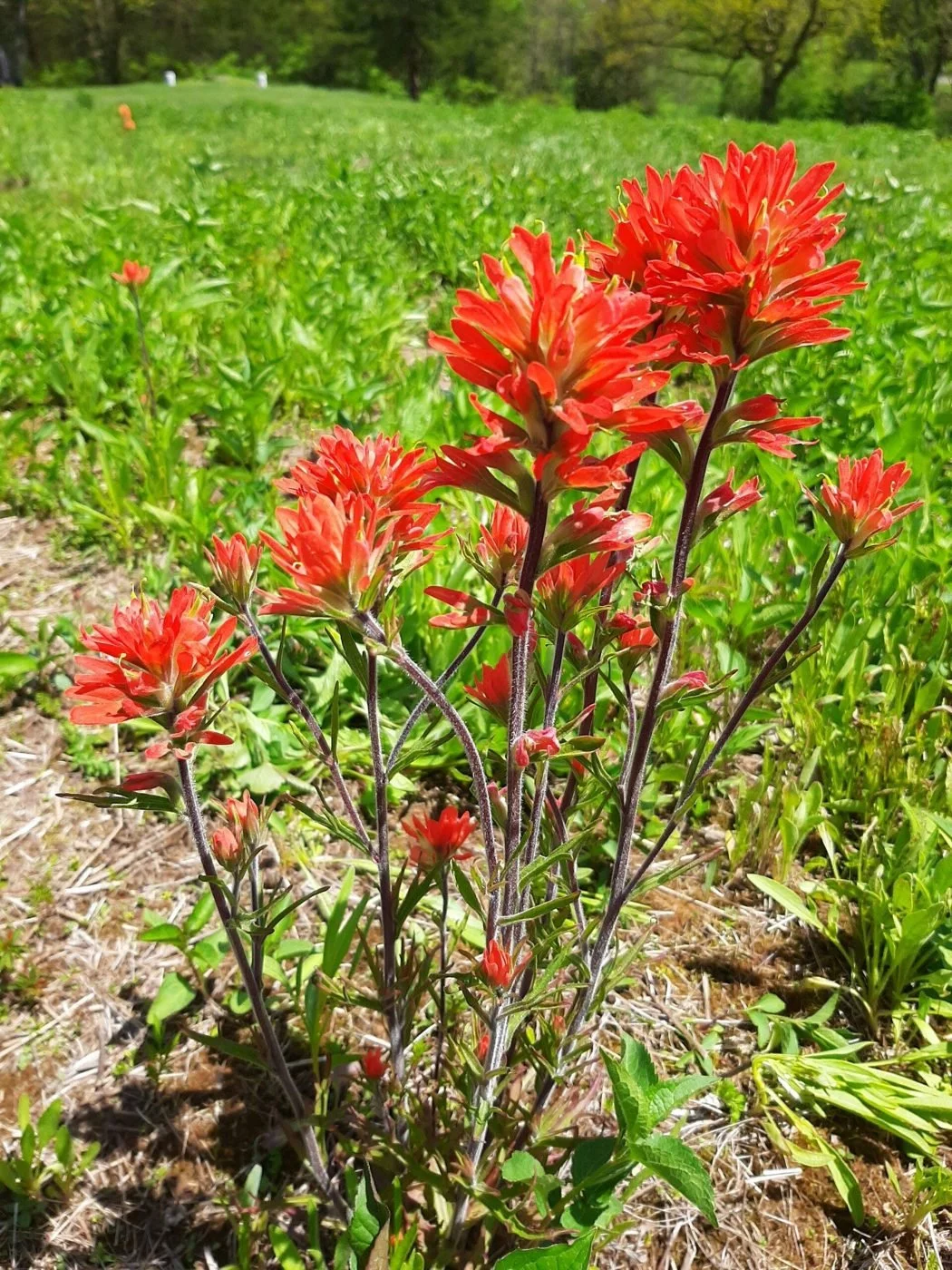
Indian Paintbrush (Castilleja coccinea)
Found on prairies and open woods. Indian Paintbrush is a mild parasite (hemiparasite) that drills into the roots of host plants—usually native grasses—to share water, minerals, and other resources of the host plant.
-
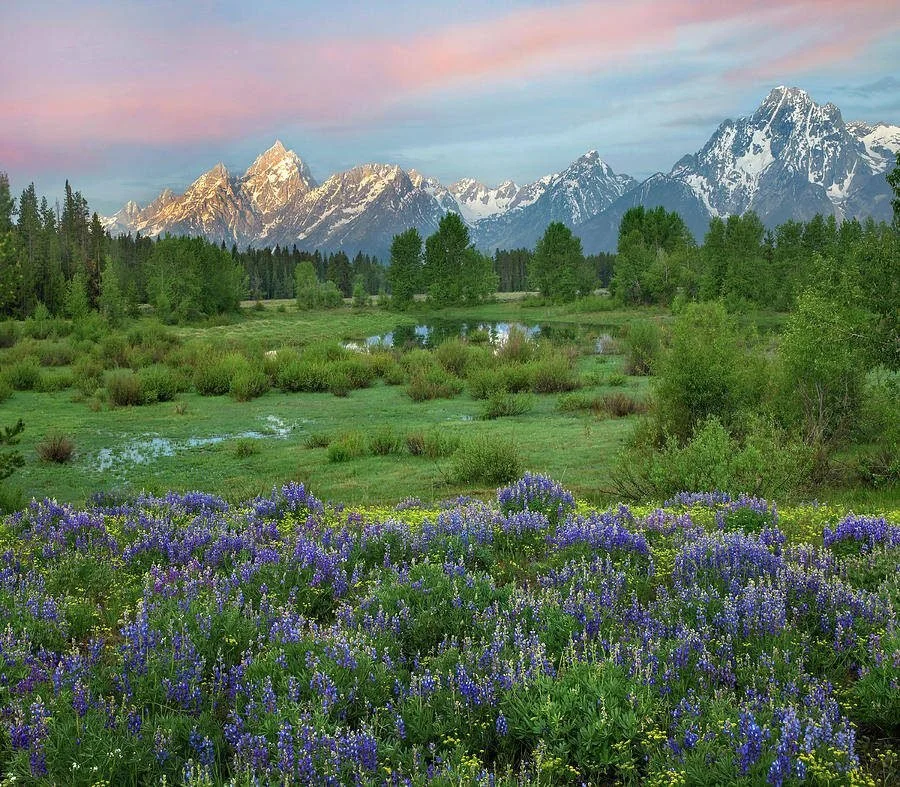
Lupine (Lupinus argenteus)
Lupine is showy and bold. It is poisonous to livestock, and the seed pods are also poisonous to humans. It is a native plant; when the range is in good condition, livestock usually leave it alone.
-
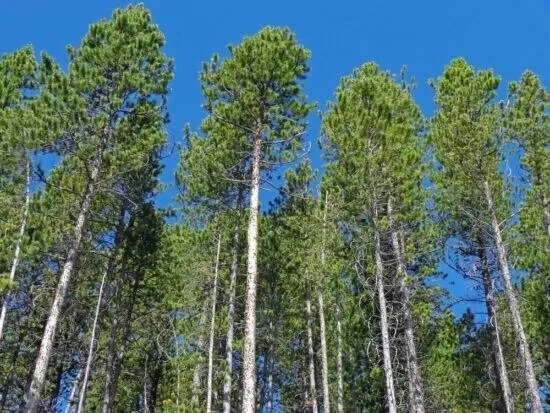
Lodgepole Pine (Pinus contorta)
The lodgepole pine is one of the most widely distributed tree species in western North America. The Rocky Mountain species, Pinus contorta latifolia, can be found from northwest Canada and the Black Hills of South Dakota as far south as Colorado, central Utah, and eastern Oregon.
-
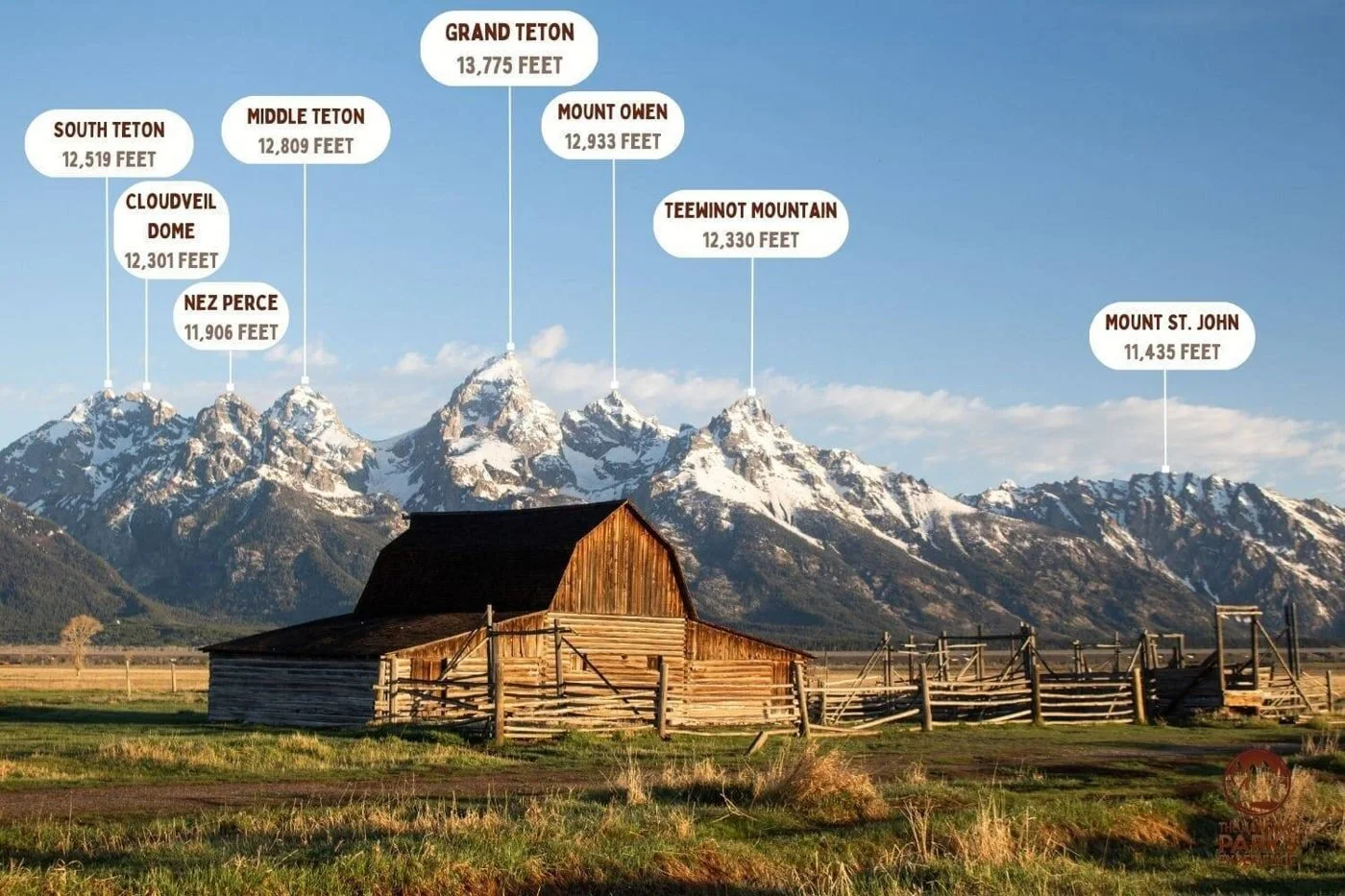
The Teton Range
The Teton Range in Wyoming is anchored by the central Cathedral Group—Grand Teton (13,775 ft), Mount Owen, and Teewinot—along with Middle and South Tetons. Other prominent peaks include Mount Moran, Buck Mountain, Static Peak, Nez Perce, Mount Saint John, and Mount Wister, stretching north to south.